
Breath Control in Swimming: No Gills Required
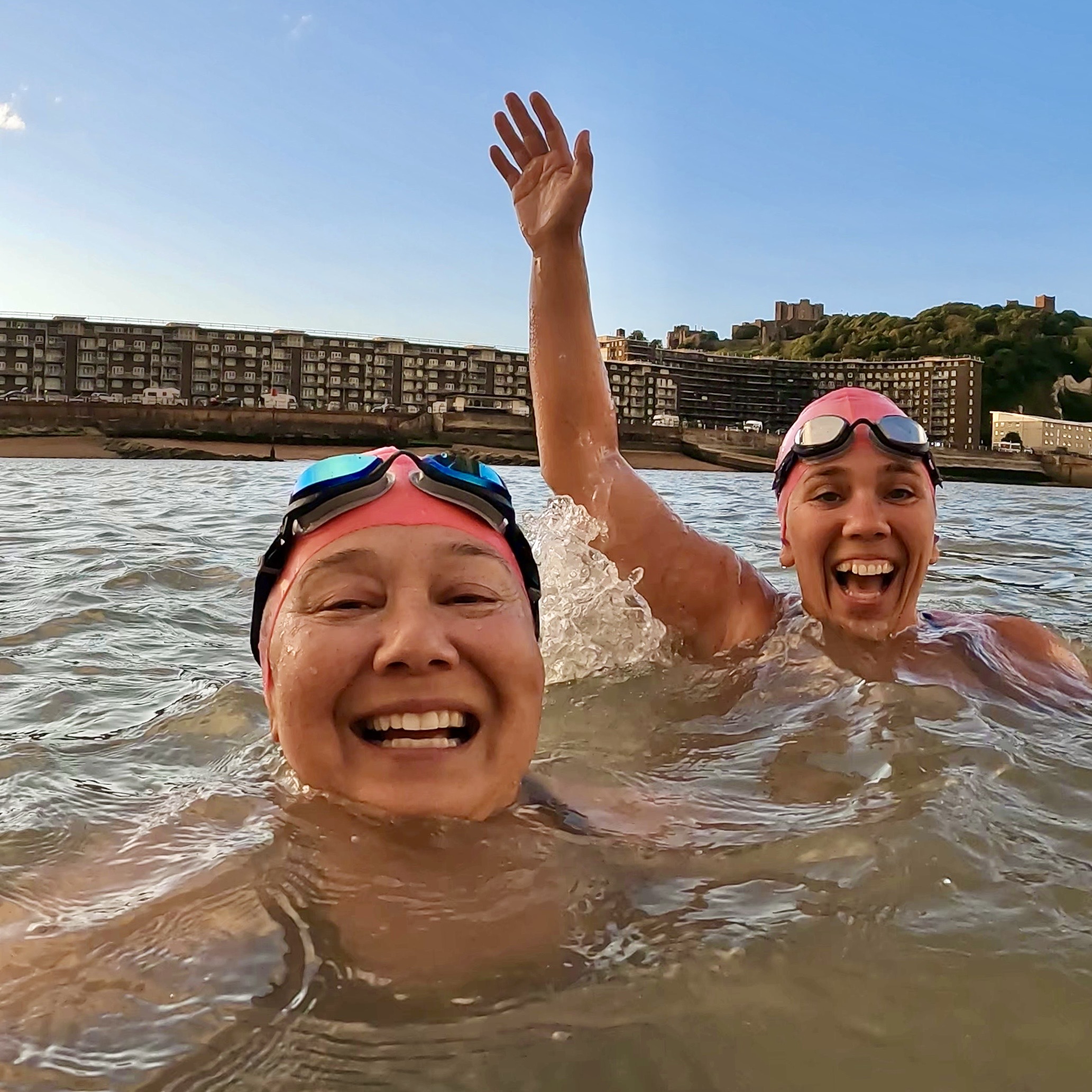
I first learned about breath control while watching a woman who apparently had gills.
I was a trainee observer on Sidney Russell's first Catalina Channel crossing, learning from Forrest Nelson, then president of the Catalina Channel Swimming Federation. Forrest is a legend in marathon swimming, with world records to his name and more experience observing swimmers than I could begin to imagine.
At one point, he looked at Sidney and exclaimed that he'd never seen anyone breathe like that. She was taking a breath every six or seven strokes. He joked that she must have gills.
At the time, my understanding of breathing in freestyle was pretty limited. I thought you either breathed to one side, like most of the adult-onset swimmers I knew, or you breathed bilaterally if you were a "real swimmer."
Sidney apparently belonged to a third category.
Years later, I'm still breathing almost exclusively to my right. Breathing to my left feels about as natural as trying to write with my left hand while someone sprays me in the face with a hose. And breath control? I complain about it constantly.
Here's the frustrating part. When I relax enough to breathe every four strokes, my swimming actually feels better. My stroke is smoother, my body position improves, and I feel like I'm moving through the water more efficiently. Unfortunately, my lungs have other ideas. Before long, I'm back to gasping for air every two strokes.
So how does Sidney swim for hours, sometimes more than 20 miles, breathing every six strokes? And more importantly, should the rest of us even be trying to? It turns out I was asking the wrong question.
What Breath Control Really Means
Sidney
First, let's clear something up. I don't expect everyone to breathe every six strokes just because I do. And breathing every two strokes doesn't make you a less accomplished swimmer.
What I want is for you to have control over your breathing, rather than letting the need for your next breath dictate everything about your stroke. When I teach breath control, I'm looking at three things: how you take in air, how you release it, and how your breathing fits into the rhythm of your swimming.
One of the first things I work on is the exhale.
Imagine blowing bubbles through one of those tiny stir straws into a glass of water. You want a gentle, controlled stream of bubbles, not one enormous explosion that empties your lungs all at once. That's the kind of relaxed exhalation I encourage swimmers to practice in the water. You're not holding your breath or trying to see how long you can go without air. You're learning to release it comfortably and be ready for your next inhale. When swimmers rush their exhale or hold their breath until the last moment, I often see the same thing happen. They become urgent for air, lift their heads, and interrupt the rhythm of their stroke.
I want them to learn to breathe "in the pocket." That means keeping the head low, letting the body's rotation bring the mouth toward the surface, and taking a breath without dramatically changing the stroke. The goal is a smoother, more balanced stroke, with breathing that feels like part of the movement rather than an interruption.
And sometimes, that means slowing down.
It's something I tell my swimmers all the time. If you're rushing through the water and fighting for your next breath, slow down. Give yourself a chance to feel what your body is doing. Once you find that rhythm, you can begin learning how to adjust it.
The Ocean Doesn't Care About Your Breathing Pattern
In the pool, everything is predictable. The water is relatively calm, the black line tells you where to go, and you can usually count on taking a breath when you want one.
The ocean has other plans. You might have a support boat you need to keep an eye on. The sun might be blinding you on your favorite breathing side. Or a wave might roll directly into your face just as you turn to inhale. Sometimes you simply have to change what you're doing.
During my attempted double crossing of Lake Tahoe, the wind whipped up the water until there was almost no predictable rhythm to the swells. I had to be constantly aware of what the water was doing because a breath that looked available one moment could disappear the next. In conditions like that, I sometimes time my breathing to the top of a swell. It feels a little like reaching the top of a roller coaster, that brief moment when you're suspended before dropping back down.
It's a wonderful feeling when you get the timing right. When you don't, you might get a mouthful of lake. That's why I want my swimmers to be adaptable.
You don't necessarily need to be a perfect bilateral breather. It certainly helps to be comfortable breathing on either side, but that's not realistic for everyone. What matters is having enough awareness and flexibility to respond when your usual breathing rhythm gets interrupted.
If water covers your mouth when you're about to inhale, close it and find your next safe opportunity to breathe. If you need to lift your head, pause, or stop for a breath, do it. Getting air safely always comes before maintaining a perfect stroke.
Personally, my breathing changes all the time. During long ocean swims, I often breathe every six strokes. At altitude, it's usually every four. If I'm working harder or kicking more, I might breathe every two or three. There's nothing magical about six strokes. It's simply a comfortable rhythm for me under certain conditions.
What I want my swimmers to develop is the ability to recognize what their bodies need and respond without losing control of their swimming.
And that brings us back to the pool.
So How Does Breath Control Feel to Everyone Else?
I spend a lot of time asking my swimmers how things feel. Not just how fast they're going or how many strokes they're taking, but what they're actually experiencing in the water.
So I asked a group of my athletes how they felt about breath control. Let's just say the responses weren't all glowing endorsements.
John, a lifelong Masters swimmer and former triathlete, summed it up in four words: "Out of breath, of course!"
Bernie, a former triathlete training toward a channel crossing, had a slightly more colorful response. "Are you talking about the punishment you put me through with breathing every 7/9 strokes, or the breathwork I'm currently doing? You're killing me over here, Sidney!!" But then he explained something that gets right to the heart of why I teach it. He said the practice helps him relax, return to the moment, and concentrate on his glide and distance per stroke. "Just glide. Today was a great reminder of that."
That's what I love to hear.
When Bernie stops thinking about forcing his way through the water and starts paying attention to his stroke, he's working on the very thing I want him to develop.
Elizabeth, who learned to swim as an adult and has since completed marathon swims lasting several hours, described feeling almost relaxed when she's properly warmed up and swimming comfortably.
Emma, a lifelong swimmer and accomplished channel swimmer, said the practice helps her feel mentally prepared for harder sets. She thinks it calms her down and gets her ready for more demanding swimming.
But not everyone has that experience. Some swimmers find changes to their breathing pattern uncomfortable, and others struggle with them considerably. And that's important feedback, too.
A swimmer who feels dizzy, struggles for air, or starts losing control of their stroke isn't getting extra credit for toughness. That's a signal to stop the restriction, breathe normally, and recover. Breath control should never become a contest to see who can tolerate the least oxygen.
What I find interesting about all these responses is that the swimmers come from such different backgrounds. Some learned to swim as children. Others came to swimming through triathlon or discovered the sport much later in life. Some have crossed channels. Others are working toward their first big open water challenge.
Yet so many of them describe becoming more aware of their stroke when they concentrate on their breathing. That's what I'm trying to teach!
I want swimmers to notice when they're rushing. To recognize when they're lifting their heads. To find a comfortable breathing rhythm that works with their stroke rather than against it. And when the ocean decides to rearrange their plans, I want them to have the confidence to adapt.
You don't have to breathe every six strokes. You don't have to swim like me. You just need to learn what works for you, and how to adjust when it doesn't.
Putting It Into Practice
The pool is a great place to work on breathing awareness because you can focus on technique without worrying about unpredictable water conditions.
Here are three drills I use with my swimmers. The goal isn't to see how long you can go without air. It's to develop awareness of your breathing and how it affects your stroke.
Practice with appropriate supervision, not alone. Don't hyperventilate, hold your breath for extended periods, or force yourself to complete a breathing pattern. Breathe whenever you need to, and stop the exercise if you feel dizzy, unusually breathless, or uncomfortable.
1. Drop a Breath
Swim an easy 50 and count how many breaths you take. On the next 50, see whether you can comfortably take one fewer breath while maintaining a relaxed, smooth stroke.
If it feels natural, you can explore another 50, but don't treat progressively fewer breaths as the goal. There's no prize for the lowest number.
Pay attention to your distance per stroke, your tempo, and whether you're rushing to get to the next breath.
What I'm looking for: A relaxed, efficient stroke and greater awareness of how breathing affects your movement through the water.
2. Change Your Breathing Pattern
I sometimes give experienced swimmers breathing patterns such as 3, 5, 7, 9 strokes, or 2, 4, 6, 2, changing the pattern every 25, 50, or 100.
The even pattern returns to two rather than progressing to eight because swimmers accustomed to breathing every two strokes may find eight unrealistic.
These aren't numbers you have to achieve. Start with a comfortable variation, perhaps 2, 2, 4, 2 or simply alternating between two and three. Longer intervals are for swimmers who can maintain comfortable breathing. Never force a count or push through the urge for air.
What I'm looking for: The ability to make small, comfortable adjustments to your breathing while maintaining a consistent stroke.
3. One Direction Breathing
Choose one side of the pool, and breathe toward it for an entire 25.
When you turn around, switch your breathing side, so you're still looking toward that same wall.
For example, you might breathe to your right going down the pool and to your left coming back.
This is especially helpful if you're accustomed to breathing almost exclusively to one side. Start with just a few comfortable breaths on your less familiar side if necessary.
What I'm looking for: Better balance and rotation, and more confidence breathing to either side when conditions require it.
Remember, none of these drills should leave you fighting for air. The objective is to become more comfortable and adaptable, not to prove how long you can go between breaths.
Some of my swimmers are comfortable breathing every four or six strokes. Others prefer every two. That's fine with me. What matters is that you understand your breathing, recognize when it's affecting your stroke, and have the confidence to adjust when you need to. Because sooner or later, the ocean will have something to say about it.
And for the record, I don't have gills. Although I wouldn't have minded a pair during my Lake Tahoe swim.
Now I'd love to hear from you. Do you struggle with breathing to one side? Have a breathing pattern that works particularly well? Or are you still trying to figure it all out? Share your experiences and questions in the comments. I'm always happy to talk swimming, and chances are someone else is wondering the same thing.
Comments